 Brief Shapes
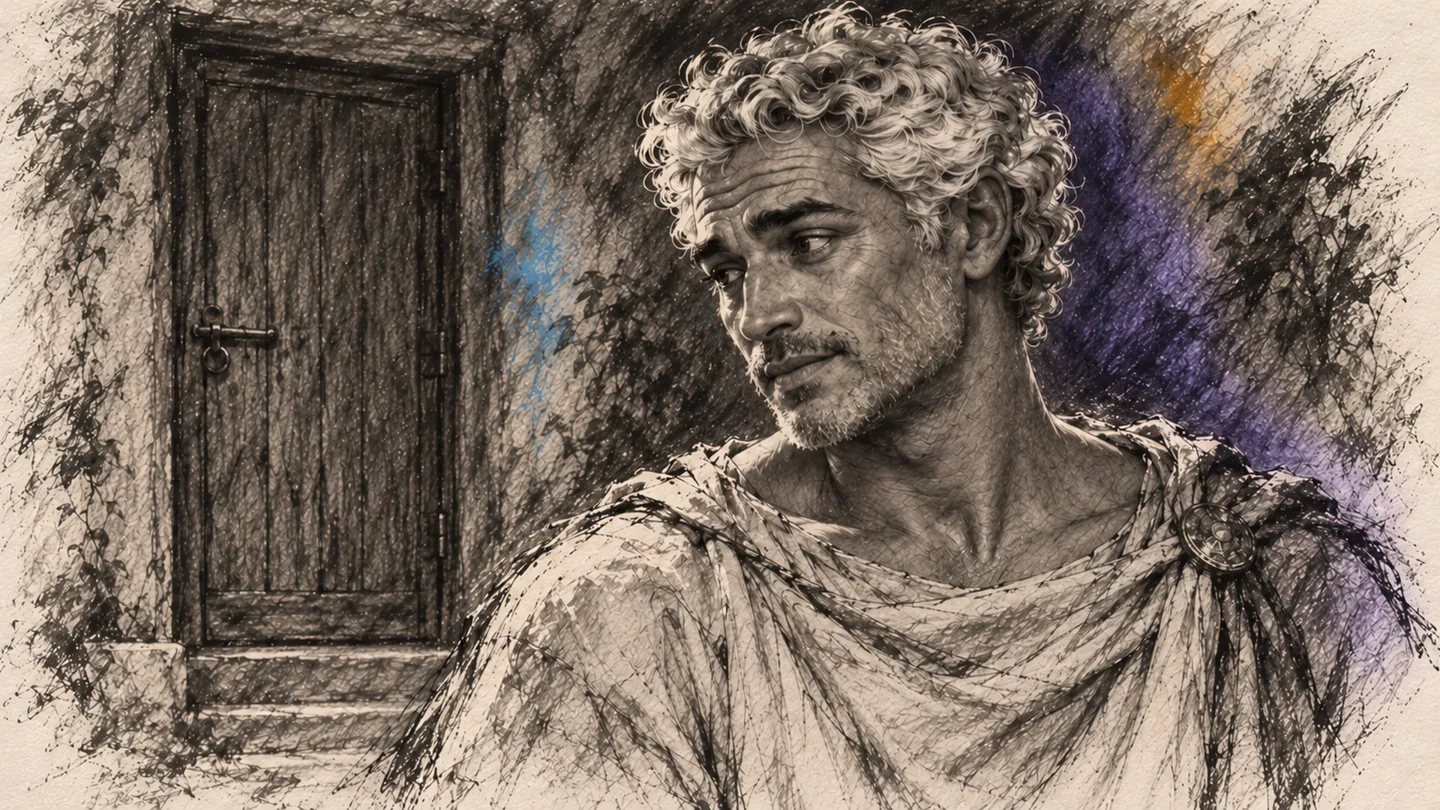
Morpheus begins with an impressive imitation and one serious mistake: he has already put forgiveness into the borrowed face. The woman stops him. She has not come to sleep through a happy ending; she needs to practise telling the truth without knowing whether it will be welcomed. Our opening film of Season Three turns a divine talent for human appearances towards a limit that even a beautiful dream should respect.
A messenger in a familiar shape
In Ovid’s Metamorphoses XI, Ceyx dies in a shipwreck while his wife Alcyone waits for him. Juno sends Iris to Sleep, asking for a dream that will tell Alcyone the truth. Sleep selects Morpheus from his many sons. Morpheus excels at reproducing human appearances, movements, clothing and speech. His brothers have different specialities: Icelos, called Phobetor by mortals, takes animal shapes; Phantasos imitates inanimate things.
Morpheus reaches Alcyone in the likeness of her drowned husband. His wet hair, voice and gestures make the message painfully recognisable. She wakes reaching for someone who is not physically there. This ancient episode concerns a death revealed through a dream, not an apology or the reconciliation of siblings. Our film borrows the human imitation, not the plot of Ceyx and Alcyone.
Sources: Ovid.
Dreams do not have one family tree
Hesiod’s Theogony lists Sleep and the tribe of Dreams among the children of Night. It does not name Morpheus or give him Ovid’s particular task. These are different poetic accounts of the world of dreaming, not interchangeable entries in a single consistent divine family tree.
For this film, Ovid supplies the useful dramatic gift: precise human mimicry. We do not present Morpheus as one of the Twelve Olympians, the sole ancient authority over every kind of dream, or a character borrowed from a modern comic. “Brief Olympian Shapes” names our Greek collection; it is not a statement of his membership in that group.
Sources: Hesiod.
Rehearsing the words, not the answer
The woman has hurt her brother. He admitted that he was frightened; she made a joke and let other people laugh. Afterwards she kept reaching his door and turning away. The dream gives her a likeness before whom she can try again. That situation, the two siblings and Morpheus’s changing understanding are all original inventions.
At first the dream-shaper behaves like a director who thinks satisfaction is his job. He can copy a cough, a gesture and a crooked smile. He offers an implausibly graceful dance and a welcome the real brother has not given. The woman’s resistance brings a little dry humour to the scene: the performance may be technically accomplished, but it is emotionally false.
She asks him to take the reassurance out. The brother’s likeness becomes guarded and hurt, and the dream grows quieter. This is the crucial shift. She no longer uses the rehearsal to prove that her intentions were good or that the harm was small. She names what she chose to do and the trust she failed to protect.
Morpheus, too, has something to learn. Being able to wear someone’s face does not authorise him to supply that person’s answer. The likeness can listen; it cannot forgive on another person’s behalf. His restraint becomes more helpful than his virtuosity. The dream offers practice, not a counterfeit resolution.
The apology therefore asks for no comforting performance in return. The sister is willing to hear her brother, and willing to leave if he wants space. Her readiness is not the same as certainty that the relationship will recover. That uncertainty is kept intact when she wakes, puts on her sandals and goes to the real door.
Three knocks bring the film into morning. The door stays closed on screen. Morpheus turns away before an answer comes, and we turn away with him. This is not a cliffhanger promising a hidden scene of forgiveness. It is the boundary the whole song has been learning to honour: the next response belongs to the living person on the other side.
Colour where reality has slipped
Charcoal marks on warm, pale paper make the dream feel provisional. Sparse blue and amber smudges sit beyond the outlines, like small mistakes in reality rather than a wash of decorative colour. A violet-indigo shadow follows Morpheus and his borrowed likeness, giving the otherwise human figure an unnatural remainder.
The animatic holds its illustrations long enough for hesitation to become visible. A closed door repeats, but the woman’s relation to it changes. At the end Morpheus smudges out, while the ordinary threshold remains. The visual release is not the door opening. It is the dream no longer needing to control what happens there.
Morpheus: Leave Me the Morning
A few brief shapes.
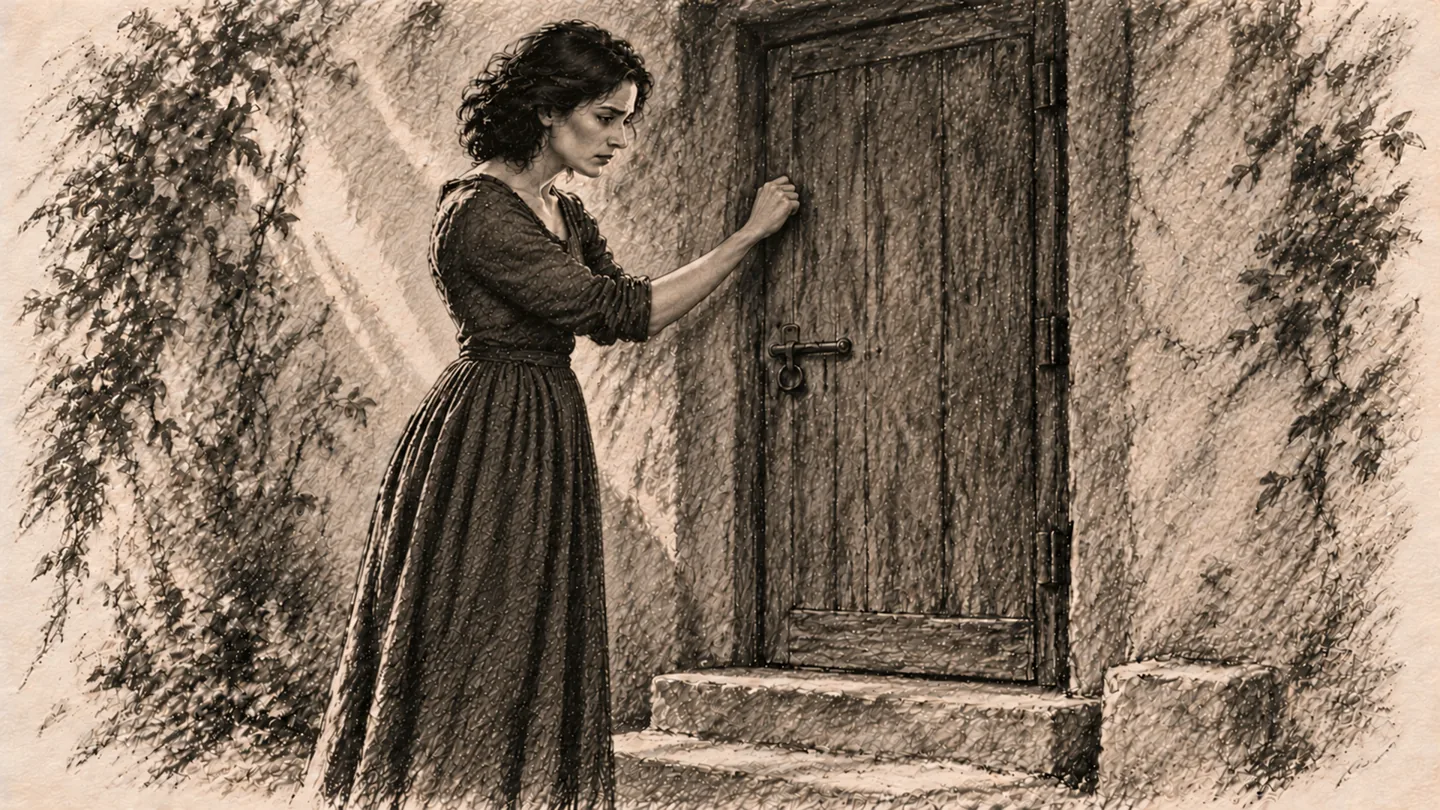
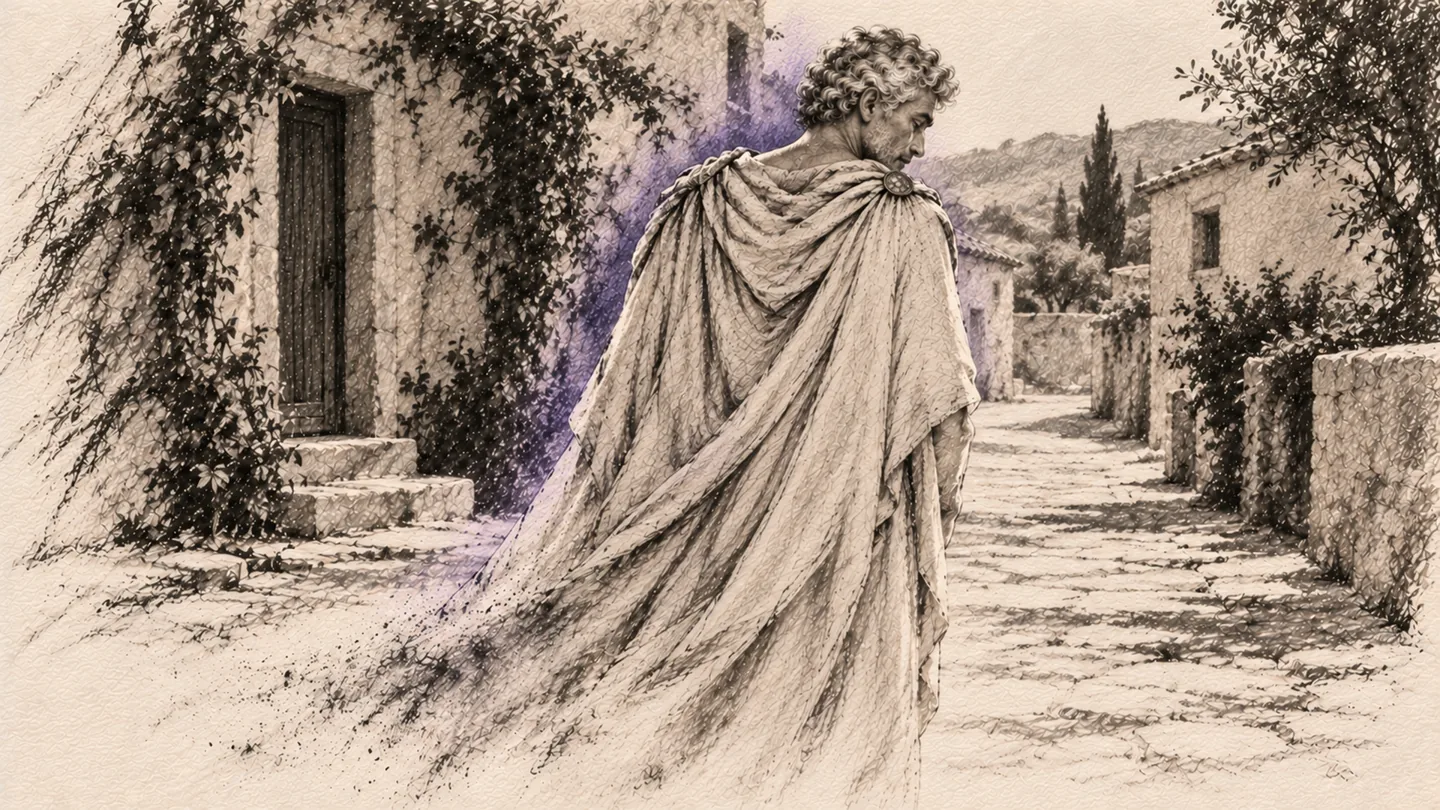
Brief Shapes film artwork: an artistic interpretation, not an archaeological reconstruction.
Sources & further reading
An introduction to the cited ancient accounts and the distinct choices of our film, not an exhaustive catalogue of every surviving tradition.
- Ovid · MetamorphosesXI.583–709, especially 633–676 · translated by Brookes More. Read the source ›
Iris’s commission, the specialities of the dream figures and Morpheus’s appearance to Alcyone (spelled Halcyone in this translation). - Hesiod · TheogonyLines 211–213 · translated by H. G. Evelyn-White. Read the source ›
Night as the mother of Sleep and Dreams; Morpheus is not named in this passage.
Beyond our artwork
Antonio Tempesta’s 1606 etching shows Morpheus appearing to Alcyone in Ceyx’s guise. British Museum X,3.303. This is early-modern reception of Ovid, not an ancient depiction or a scene from our invented sibling story.
Morpheus as Ceyx: a later illustration ›
External museum record; its image remains on the institution’s website. No reproduction rights are implied.